
How to Plan Your First Wild Camping Trip in Scotland
Scotland is one of the few places in Britain where you can shoulder a pack, walk out of a village and sleep on a hillside without asking anyone's permission. That freedom is real, and it's the reason so many people pick Scotland for their first night under canvas. What catches out newcomers isn't the walking. It's the small print, the timing and the midges.
Get those three things right and your first wild camp will feel less like an endurance test and more like the reason you bought the tent in the first place. Here's how to plan it properly.
What wild camping actually means in Scotland
Scottish access rights, set out in the Land Reform (Scotland) Act 2003 and explained in the Scottish Outdoor Access Code, allow lightweight, responsible camping on most unenclosed land. That means small numbers of people, a small tent, and no more than two or three nights in the same spot. It is not a licence to park a large tent beside your car, and it doesn't apply to enclosed fields, gardens, the ground immediately around buildings, or land where crops are growing.
There are local exceptions too. Parts of Loch Lomond and the Trossachs National Park operate camping management zones where a permit is needed between spring and autumn, and some estates, Ministry of Defence ranges and nature reserves have their own restrictions. Byelaws and permit areas do change, so check the national park's current guidance and the Outdoor Access Code before you travel rather than relying on a forum post from years ago.
Two habits keep you on the right side of everyone: camp well away from buildings, roads and livestock, and if a landowner or ranger asks you to move on, do it without an argument. Goodwill is what keeps access open.
Choosing a route you can actually finish
Pick a route for the weather you're likely to get, not the one you're hoping for. A first trip of six to ten kilometres with modest ascent, finishing at a camp you reach by mid-afternoon, is far more enjoyable than a twelve-hour day that ends in the dark with a head torch and cold hands.
Rough planning figures help. On rough Scottish terrain with a pack, allow about an hour for every three kilometres, then add roughly an hour for every 300 metres of ascent. If a route is 9 km with 600 m of climbing, budget around five hours of moving time, plus stops.
Use OS Landranger or Harvey maps rather than a phone screenshot, and read them for three things: water sources, boggy ground, and a bail-out option. Having a village, a bus route or a bothy within reach on your first trip is sensible, not cowardly. Leave a route card with someone at home and tell them when you expect to be back.
Where to pitch, and where not to
The classic advice is to pitch late and leave early. It keeps you out of sight, reduces pressure on popular spots and means you're walking in the best light anyway.
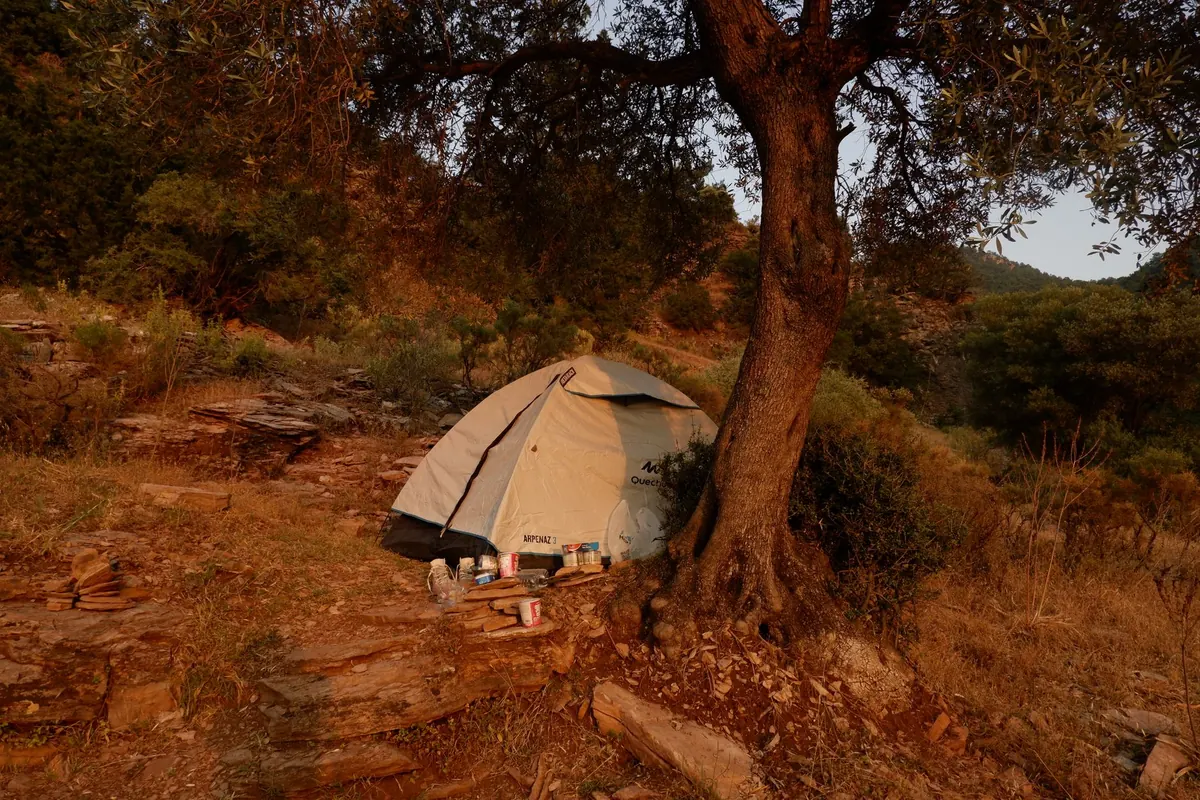
Look for level, well-drained ground on durable surfaces, ideally a spot that has clearly been camped on before. Avoid the fragile, eroded strip right at a loch shore, and stay off soft vegetation. Don't pitch in a hollow where cold air settles overnight, and don't pitch under a lone tree or obvious dead branches. Look up before you commit.
Pitch late, leave early, and the hills won't notice you were there.
Keep at least a short walk from any road or building, and move on after two or three nights in the same place.
Kit that earns its place
You don't need expensive gear, but you do need gear suited to a wet, midgey, midge-heavy country. A comfortable target for a summer first trip is a pack of around 10–12 kg with food and water.
- Tent: a lightweight three-season tent with a fully enclosed inner. Mesh panels are midge motorways.
- Sleeping system: a bag rated for the temperatures you'll actually meet, plus a decent mat. Cold comes up through the ground.
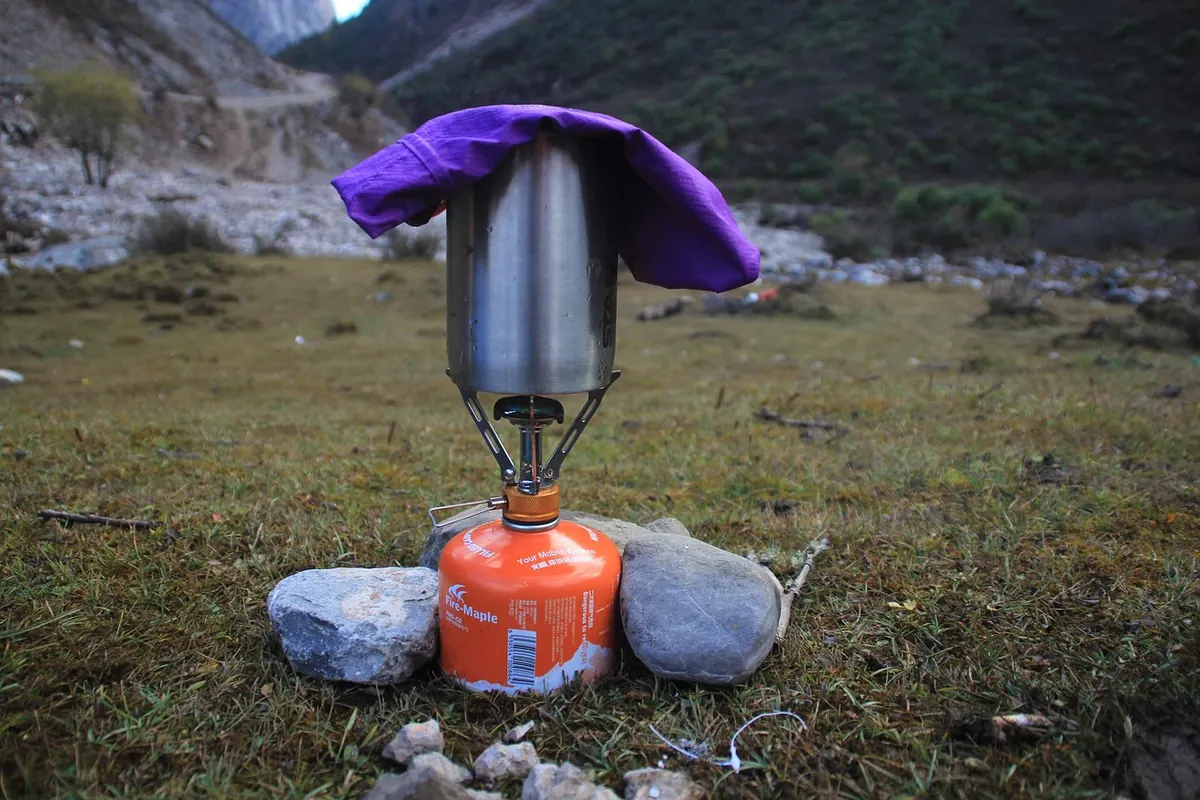
- Stove and fuel: a small gas or alcohol stove. Fires are discouraged and banned in some areas.
- Water treatment: filter, tablets or a boil. Fast-flowing water high up is a better bet than a lowland burn, but treat it anyway.
- Navigation: paper map, compass, and a charged phone in a dry bag.
- Clothing: waterproof jacket and trousers, spare warm layers, dry socks.
- Midge kit: head net, repellent, long sleeves and trousers for the evening.
- Loo kit: a small trowel and a bag for used paper.
Midges, ticks and Scottish weather
Midges
The midge season runs roughly from late May to late August, with the worst of it in still, humid, overcast conditions at dawn and dusk. Sheltered glens and the west coast are usually the hardest hit; wind, sun and higher, drier ground give you some relief. September often brings fewer of them and still gives you long, decent days.
If you're camping between June and August, choose a breezy pitch rather than a sheltered one, keep the tent zipped, and eat your dinner before dusk or inside the tent's porch.
Ticks
Ticks live in long grass, bracken and woodland, and they're active for much of the year. Tuck trousers into socks, check yourself thoroughly in the evening and remove any tick promptly with fine tweezers or a tick tool. If you later develop a spreading rash, fever or feel generally unwell, seek medical advice promptly and mention the bite.
Weather
Check the Met Office mountain forecast and the Mountain Weather Information Service in the days before you go, and build a Plan B into the trip. Scottish weather changes fast, and turning back is a skill worth practising.
Leave no trace, in practice
Leave No Trace isn't a slogan; it's a set of habits. Take everything home, including what you assume will rot: fruit peel, tea bags, and anything labelled biodegradable. Don't feed wildlife, and store food securely so you're not inviting anything into your tent.
For toilet stops, walk well away from water, paths and buildings, dig a hole about 30 cm deep, and carry the paper out in a bag. In busy areas, or where local guidance asks for it, carry all waste out. Stoves beat fires every time, and never cut standing or dead wood.
Your first night, step by step
- Arrive with at least two hours of daylight left.
- Fill water bottles before you climb to camp.
- Walk five minutes past the obvious pitch. Better spots are usually further on.
- Check the ground, the shelter and what's above you, then pitch.
- Cook and eat away from the tent, and store food out of reach.
- Set an alarm, pack up, and inspect the ground for anything you've dropped.
Then walk out, leave the car park or lay-by exactly as you found it, and start thinking about where you'll go next. That's usually how it begins.
Photo: Ceyda Sude Tunalı / Pexels