A Seasonal Guide to Foraging on UK Country Walks
You can eat very well out of a British hedgerow, and the surest way to learn is to follow the calendar rather than a recipe. Wild food arrives in a rhythm: soft leaves and shoots in spring, flowers in early summer, berries and nuts as the evenings shorten, then fungi, seaweed and hardy greens through the cold months. Learn one or two species a month and within a year you will have a dozen you can identify with real confidence. The rest is timing, small quantities and a bit of restraint.
The Rules of the Hedgerow
Start with the law, because it is both simpler and stricter than most people assume.
In England, Wales and Scotland, picking wild fruit, foliage, flowers or fungi for your own use is generally not treated as theft, provided you have permission or a right of access. That last part matters more than many guidebooks admit: public access usually covers the path, not the field beside it. Uprooting a wild plant without the landowner's permission is a separate offence under the Wildlife and Countryside Act 1981, and a small number of rare species are protected outright. Scottish access rights are broad, but they do not extend to taking anything for commercial purposes. All of this is a general sketch rather than legal advice — if you are unsure about a specific site, ask the landowner or the managing body.
There are also places where foraging is banned or limited by local bylaws: many nature reserves, country parks and Sites of Special Scientific Interest, plus land managed by conservation charities. Check the signs and the website before you set off.
Then there are the places where you should not pick at all, however legal it may be — busy roadside verges, field edges next to sprayed crops, low branches on popular dog-walking routes, and anywhere the ground looks disturbed or contaminated.
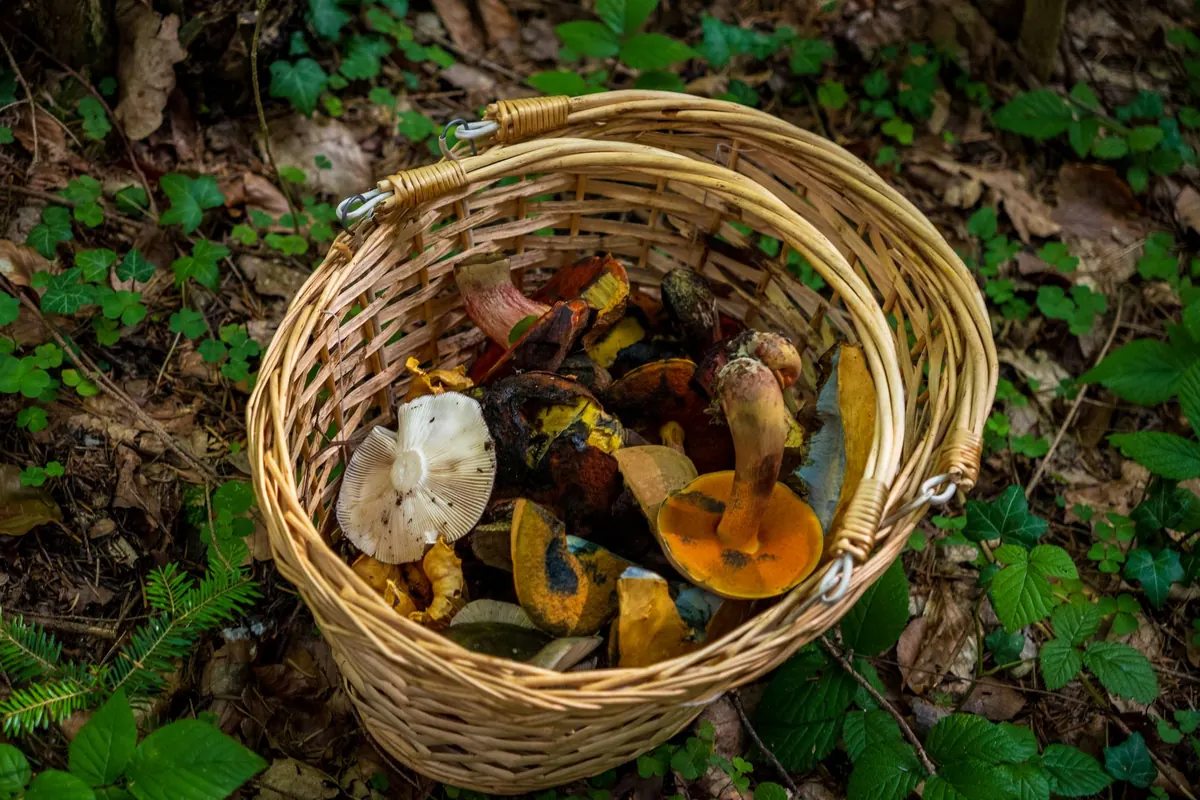
Sustainability is mostly good manners plus a bit of arithmetic. Take a few leaves from many plants rather than stripping one. Leave roots in the ground. Leave the last third of anything for the birds, the voles and next year's crop. With mushrooms, cut rather than pull, and carry them in a mesh basket or paper bag so spores drop back onto the ground as you walk.
Safety comes down to one sentence: if in doubt, leave it out. The plants worth real caution are the ones that look like food — hemlock water dropwort, whose roots resemble parsnip, and fool's parsley, which resembles flat-leaved herbs. Fungi demand more care still, because a photograph is not an identification. If you are pregnant, breastfeeding, managing a health condition or prone to allergies, speak to a pharmacist or doctor before eating unfamiliar wild plants.
January to March: Lean Pickings, Sharp Flavours
Winter foraging rewards local knowledge rather than enthusiasm. Look for chickweed, hairy bittercress and wintercress in sheltered hedgerows and allotment edges, sea beet along the coast, and three-cornered leek in the mild south-west, where wild garlic leaves can appear as early as late January. Alexanders, with its glossy celery-like leaves, shows up on coastal verges from February. Gorse flowers, smelling faintly of coconut, infuse beautifully into a syrup. Nettle tops are worth waiting for — from late February, take only the top two or three pairs of leaves and blanch them well before eating.
Winter fungi include velvet shank in dense orange clusters on dead elm, oyster mushrooms after a cold snap, jelly ear and wood blewit. Only pick any of these if you can identify them with complete certainty, and never from a reserve that prohibits it. Seaweed is at its best in cold water, but check local rules, never cut the holdfast, and treat the tide with respect.
April to June: Green Shoots and Elderflower
April is the month the countryside becomes edible. Wild garlic carpets damp woodland, and its leaves are far easier to identify by smell than by sight. Hawthorn's young leaves — once known as bread and cheese — are pleasant in salads, along with sorrel, cleavers and common mallow. St George's mushroom appears on grassland edges around the saint's day, and morels turn up in old orchards and disturbed woodland, though both need expert-level confidence.
By May, hawthorn blossom can be gathered for cordial and wild garlic flowers pickled as ramson capers. Elderflower follows from late May into June, and this is the forager's easiest win: pick the flat creamy heads on a dry, sunny morning, shake them free of insects, and turn them into cordial, fritters or a sparkling infusion. Meadowsweet, lime flowers and the first wild strawberries round out early summer.
July to September: Berries, and the Start of the Mushroom Season
High summer is berry time. Bilberries ripen on heather moorland through July and August and are worth the scratched forearms; wild raspberries grow in clearings; blackberries begin in late July and run into September, with the sweetest fruit on south-facing edges. Elderberries follow from late August, along with rowan berries for jelly, green hazelnuts and crab apples. Sloes arrive in September — harsh until a frost, or a night in the freezer, softens them.
The mushroom season opens quietly in July with chanterelles in birch and oak woods, giant puffballs on pasture and parasols in rough grass. Ceps usually follow from late August. This is the point where a course with an experienced teacher pays for itself many times over, because the differences between a good mushroom and a dangerous one can be small, and the consequences of getting it wrong are severe.
October to December: Nuts, Roots and Fungi
Autumn is the harvest proper. Sweet chestnuts, hazelnuts and walnuts are worth the shelling, while rosehips, sloes, crab apples and hawthorn haws make excellent jellies. On the fungal side, look for field and wood blewits, hedgehog fungus, shaggy inkcap, and — from November — winter chanterelles and velvet shank, which will keep producing into February on dead wood.
December returns you to the winter larder: chickweed, wintercress, sea beet, gorse flowers and seaweed. It is a good month to walk familiar routes without picking, noting which trees flowered well and where the hedge line holds fruit, so next year's calendar starts with a map rather than a guess.
Before You Head Out
A short kit list saves a lot of squashed blackberries:
- A flat basket or paper bag for fungi, so spores can fall as you walk
- A cotton bag for leaves and a small tub for delicate berries
- A sharp pocket knife for cutting rather than pulling
- A proper field guide — for fungi, one that shows gills, stems and spore prints
- A phone or notebook for photographs and notes on where things grow
- Gloves, and a waterproof layer you do not mind staining
Tell someone where you are going if you are heading onto moorland or the coast. Wash everything you bring home, cook nettles, elderberries and most fungi thoroughly, and eat new wild foods in small amounts the first time. Start with two or three straightforward species — elderflower, blackberries, wild garlic — and add one a season. That pace is not cautious for its own sake; it is simply how identification sticks.
Photo: Michał Robak / Pexels